
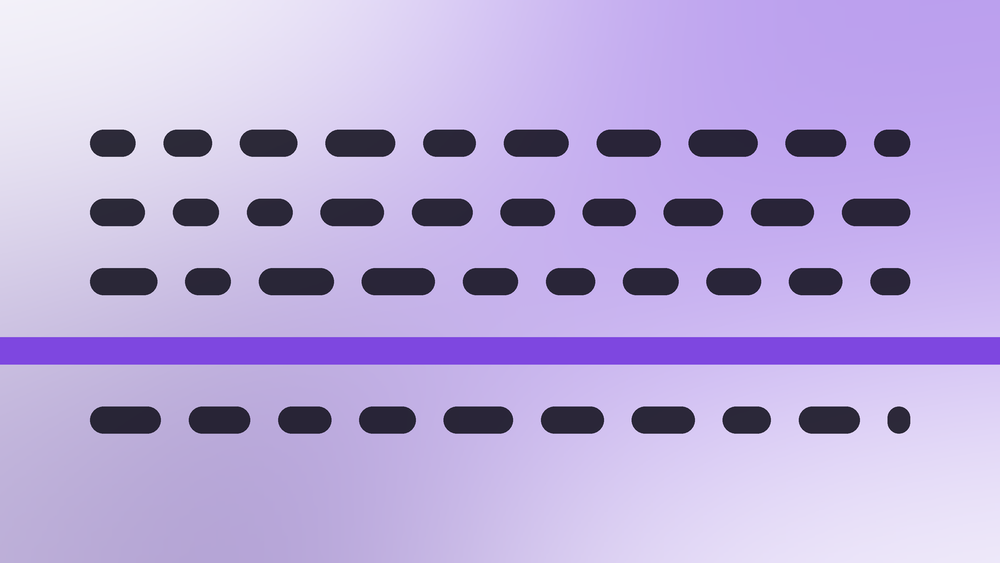
Why modern songs became three and a half minutes, and what we lost when they did.
Open any streaming app today and the three-and-a-half minute track feels like the natural unit of music. Obvious. Neutral. Just the way songs are.
But that feeling has a history.
The modern song length is not a law of creativity. It is the inheritance of old technical limits and commercial systems that hardened into culture. And once you see that the dominant format was shaped by storage constraints, radio schedules and advertising economics, a deeper question opens up: what did sound look like before all of that, and what have we been taught to ignore ever since?
This is not a case against short songs. Some things should be short. Some songs are perfect at three minutes.
It is an invitation to remember that the container is historical. Because once you remember that, the whole story changes.
Before recording, sound was shaped by use
Before sound could be captured and sold, it lived inside ritual, labour, devotion, memory and communal life. It was not primarily a product. It was something people entered.
In oral traditions, song and chant carried history, law and myth across generations, unfolding across whole evenings because they served memory and transmission, not packaging. In work songs, duration was set by the task itself: the pattern continued as long as the labour did. Repetition was not a flaw. It was a function. In ceremony, sound served prayer, trance, mourning and celebration, and it was often open-ended. It continued until the rite had done its work.
Duration, in other words, was set by intention: by what the work was for, and by what served the person receiving it. Not by the storage limits of a machine.
When music chose its own length
Here is the part of the story that usually gets skipped. It is not just that ancient or sacred music ran long. Wherever duration was not set by the medium, it was set by purpose: sometimes minutes, sometimes all night. And when the purpose was depth, the form followed it there.
In North and South Indian classical traditions, a single raga historically unfolded across two to four hours. The alap, the slow unmeasured opening in which the musician explores the mode note by note, could alone last thirty to sixty minutes. The alap alone is longer than a modern album. The length was not indulgence; the goal was to evoke a specific emotional state, and that process cannot be rushed.
In Java, a single gamelan composition could exceed forty-five minutes, and on ceremonial nights the orchestra wove them into one continuous stream of sound from sunset to sunrise. In the Arab world, the wasla carried a listener through one unbroken journey inside a single maqam: an hour or more of improvisation and song moving as one piece. In Europe, Handel's Messiah is a single work that fills an entire evening, and Beethoven's Missa solemnis, one setting of one sacred text, runs eighty minutes.
And then there is the most telling case of all: the symphony. In the concert halls of the late eighteenth century, secular music for paying audiences settled at thirty to forty-five minutes. That number was not an accident and not a leftover. It was intentionally designed. The four-movement structure was built to satisfy Enlightenment ideals of balance, logic and emotional variety: tension in the first movement, lyricism in the second, release and triumph by the finale. A complete psychological journey, self-contained, with nothing padded and nothing cut.
Hold that thought. It matters enormously for what came next.
The shortest version of the story
Oral, ritual, communal sound (prehistory onward)
Freeform, fit to the intention. Shaped by ritual, labour, memory, devotion, story.
Raga, maqam, gamelan traditions (antiquity to today)
A single piece: one hour to all night. Shaped by the state being evoked; the rite being served.
Concert era symphony (c. 1750 to 1820)
30 to 45 minutes, by design. Shaped by a complete emotional arc for the attentive listener.
Early cylinders and 78s (1877 to 1940s)
2 to 4 minutes. Shaped by mechanical limits of wax and shellac.
Singles and radio (1950s and 60s)
3 to 5 minutes. Shaped by advertising revenue, audience retention, broadcast clocks.
LP era (1948 onward)
Longer runtime, same track unit. Shaped by a bigger container; singles still built for radio.
Streaming era (2010s onward)
Technically unlimited, culturally short. Shaped by playlists, skips, algorithmic incentives.
Possible next era (now)
Fit to the intention again. Shaped by creator sovereignty, direct relationships, intentional listening.
That last line is the interesting one. But first, the machines.
Then the machines started teaching us what a song is
When recorded sound arrived in the late nineteenth century, it was revolutionary and severely constrained. Early cylinders held about two minutes. By the early twentieth century the ten-inch 78 rpm disc had become the dominant format, holding roughly three to four minutes per side.
That technical fact shaped everything. Composers, performers and record companies had to fit music into the available space. A piece that exceeded the side had to be cut, split or excluded. Over time, what began as a technical compromise became a compositional norm. Writers learned to think inside the container. Audiences learned to expect it. The market learned to reward it.
This is one of the quietest but most powerful things technology does. It introduces a limit, then waits long enough for everyone to call the limit natural.
Why the three-minute song became common sense
Then the constraint started earning money, and this is where the story sharpens.
Radio preferred short songs for reasons that had nothing to do with music. Short songs made programming predictable: they kept songs turning over, reduced the risk of listeners tuning out, and fitted cleanly around the commercial clock. Programmers avoided anything much over four minutes, and the logic was openly defensive: keep the rotation moving, and nobody stays annoyed for long. The format made a quiet promise to the audience. If you do not like this song, it will be over in three minutes.
Sit with that for a moment. The modern song length is designed around the listener who does not like the song. The older forms were designed for the opposite person: the one who wanted to stay. The alap assumes devotion. The symphony assumed enlightenment. The rotation assumes impatience.
Jukeboxes, paid per play, liked their units small. Labels built the single, the chart and the promotional machine around a length that pressed well and sold clean. And the artists felt it from inside. In 1974 Billy Joel put the whole system into one verse of The Entertainer, describing what radio did to Piano Man, cut from five minutes forty to fit the slot:
It was a beautiful song, but it ran too long. If you're gonna have a hit, you gotta make it fit. So they cut it down to 3:05.
Compare the two optimisations side by side. The symphony took opera's evening-long scale and compressed it to forty minutes, and every minute of that design served the listener's inner journey. Radio took the song and compressed it to 3:05, and every second of that design served the schedule. Both are compressions. They have opposite masters. One asked: how long does a complete emotional journey take? The other asked: how many songs fit between advertisements?
That is the real loss. Not the length itself, but the question underneath it: who was the length for?
The LP reopened the form. Radio kept the frame.
The long-playing record, introduced in 1948, could hold over twenty minutes per side, and for a while imagination caught up with the container. Concept albums. Side-long compositions. Jazz finally recorded at the length it was actually played. Albums could become worlds, and some did.
But notice what the exception proves. The LP changed what an album could be. It did not change what a song was for. Radio still bought singles, charts still counted singles, and the three-minute unit remained popular music's commercial atom. Technology had reopened the possibility; distribution quietly narrowed it again.
Formats outlive their reasons. They sediment.
Streaming removed the limit, then the algorithm locked the habit in place
Streaming platforms are constrained by nothing physical. In storage terms they are radically open. For one strange moment, music was free to be any length at all.
The moment did not last. When physical scarcity disappeared, the algorithm stepped in where the wax left off, and it did not challenge the inherited format. It automated it. The playlist became the new broadcast slot. The skip became a signal against you. The thirty-second threshold became the line where a stream starts to count, which taught writers and producers to front-load and trim. Songs did not just stay short. They got shorter, because for the first time the format could measure obedience in real time.
Spotify did not invent the short track. It inherited a century of trained behaviour and made it more efficient, more persistent and harder to escape.
What got squeezed out
If the dominant format is historical rather than natural, the question becomes: what kinds of sound does it fail?
Immersion. Atmosphere. Slow transformation. Ritual time. Extended states. Repetition that is not lazy but devotional. Sound that holds a person rather than pulling at them.
The first casualty of the clock is always the arrival. The alap, the slow entering that prepares a listener for what the music will do, is precisely the thing the modern format cannot afford. It is why intros shrank to seconds, and why so much transformational work now begins abruptly, mid-gesture, apologising for taking up time.
This matters most for meditation, healing, ambient, ceremonial and transformational sound. A guided descent is not a single. A deep listening experience should not have to pretend to be pop to survive distribution. Billy Joel's line was about a hit, and a hit has to fit. But that is the fork in the road: you can entertain with a hit, or you can transform with depth. Some sound wants duration because duration is part of the function. Some experiences need time to become what they are.
We may be at an inflection point
For most of recorded history, creators had to shape sound to fit the machine. Now the machine is flexible. The old physical constraints are gone. What remains are inherited expectations and the incentives that profit from them, and neither binds anyone who steps outside the feed to create intentional listening experiences.
So the question can finally be asked properly again. What should determine length? The medium? The advertising clock? The algorithm?
Or the intention, and the use it serves?
The symphony asked how long a complete emotional journey takes. Radio asked how many songs fit between adverts. For the last hundred years, every format has answered radio's question. Your work is free to answer the symphony's.
Naveed Akram is the founder of Indee, quiet infrastructure built around exactly this freedom: listening containers that hold sound work at full length, and let creators earn directly from the people it was meant to move.