
Close your eyes.
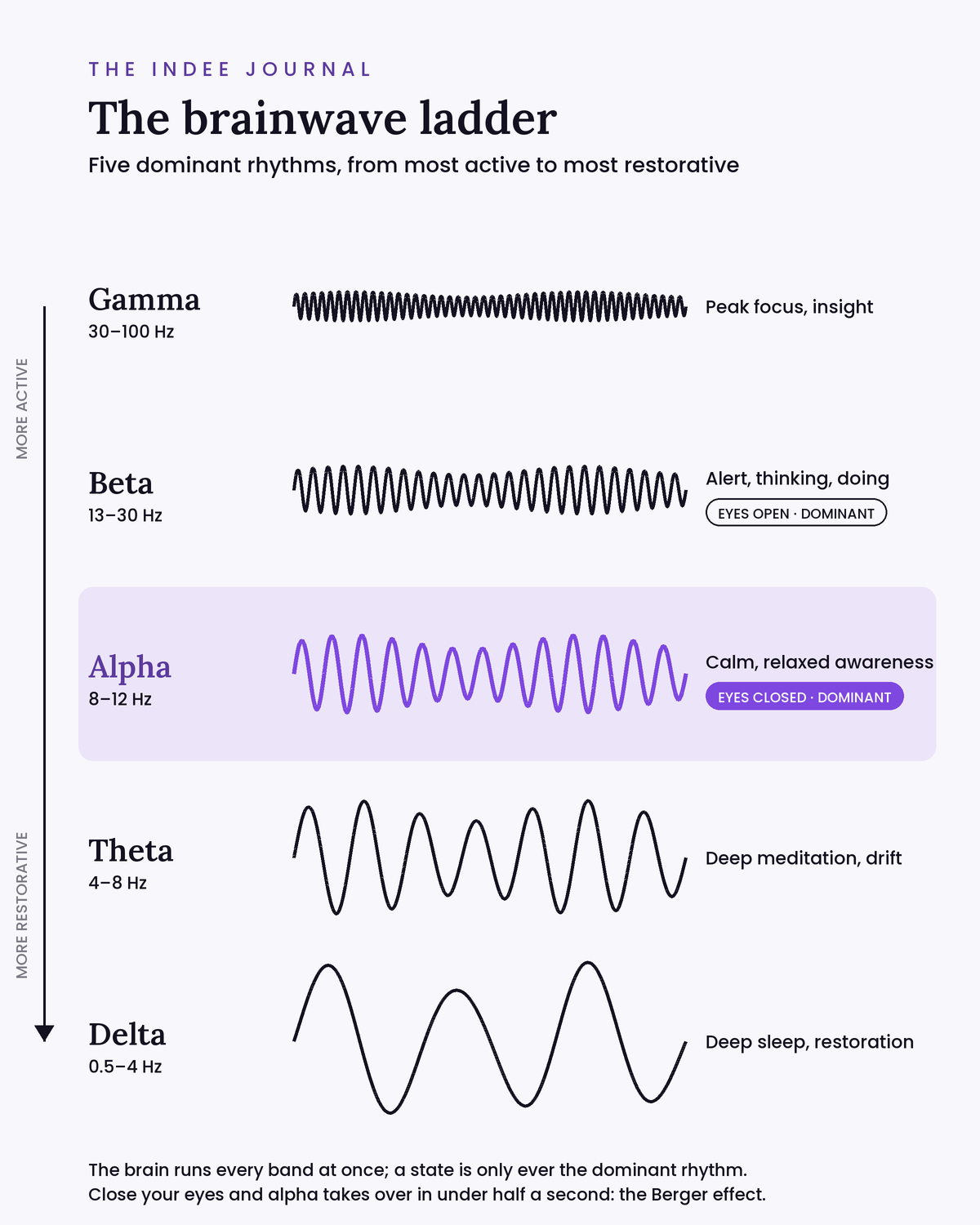
Within a second, something measurable happens. Hans Berger, the German psychiatrist who recorded the first human EEG in 1924, noticed that when his subjects closed their eyes, slow alpha rhythms became the dominant activity at the back of the brain. When they opened them, the alpha collapsed. Modern intracranial recordings have timed the shift at under half a second. A century on, the Berger effect remains one of the most reliable findings in neuroscience, and the whole intervention is two eyelids.
Why do our eyes matter so much? Because vision is the hungriest sense: in primates, more than half the cortex takes part in visual processing. Eyes open, a vast share of the brain is working on things you never asked it to consider: edges, faces, movement, glare. Essential work. It is how we read, learn and cross the road. And all of it points outward.
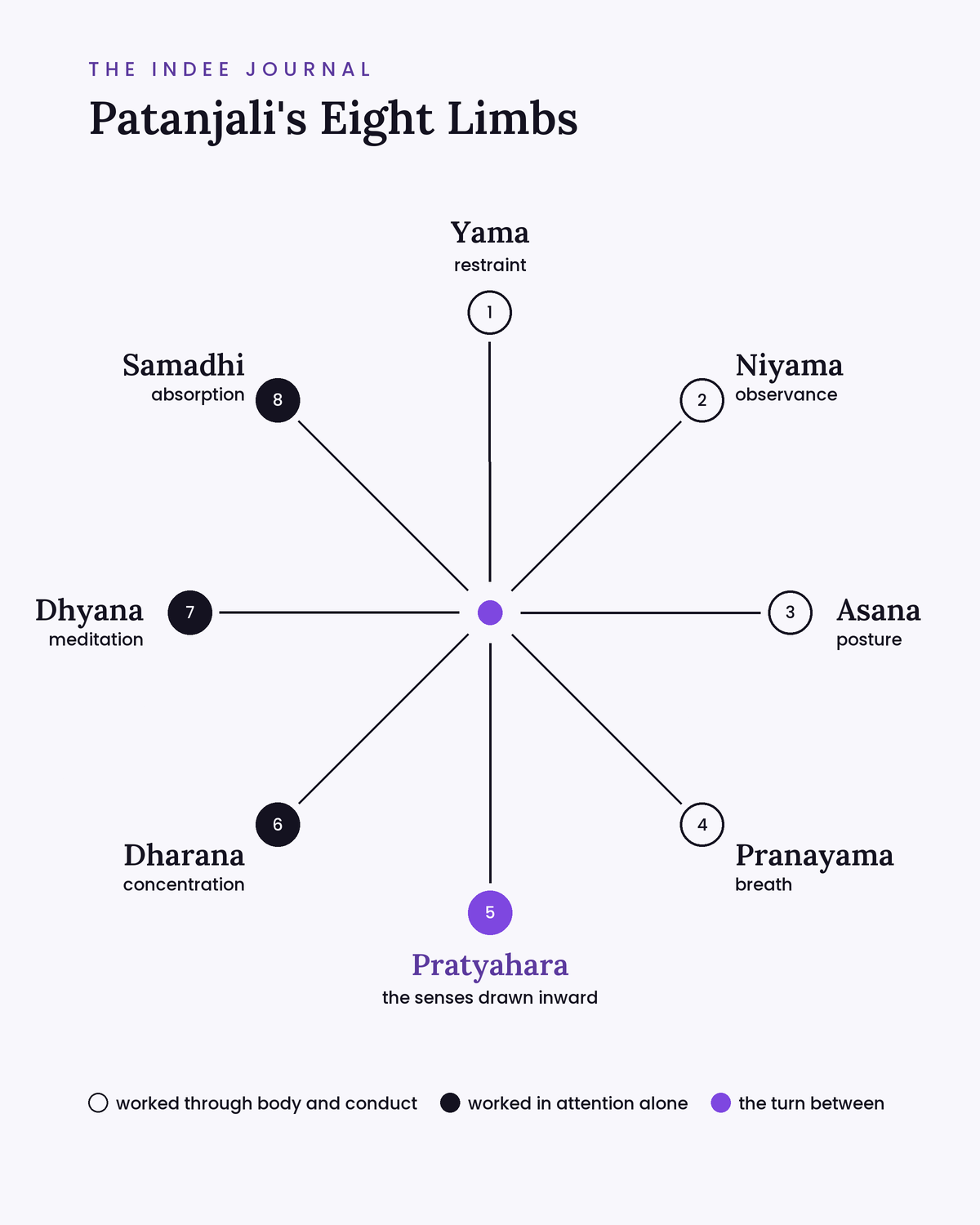
The contemplative traditions arrived here first. In Patanjali's Yoga Sutras, pratyahara, the drawing in of the senses, is the fifth of eight limbs: the hinge between the outer practices of posture and breath and the inner practices of concentration and absorption. Buddhist teachers speak of guarding the sense doors. Sufis withdraw into khalwa, seclusion. Some Tibetan and Bön lineages went further and built whole retreats in darkness, weeks of practice without light. Different maps. The same instruction: the deep work begins when attention turns inward.
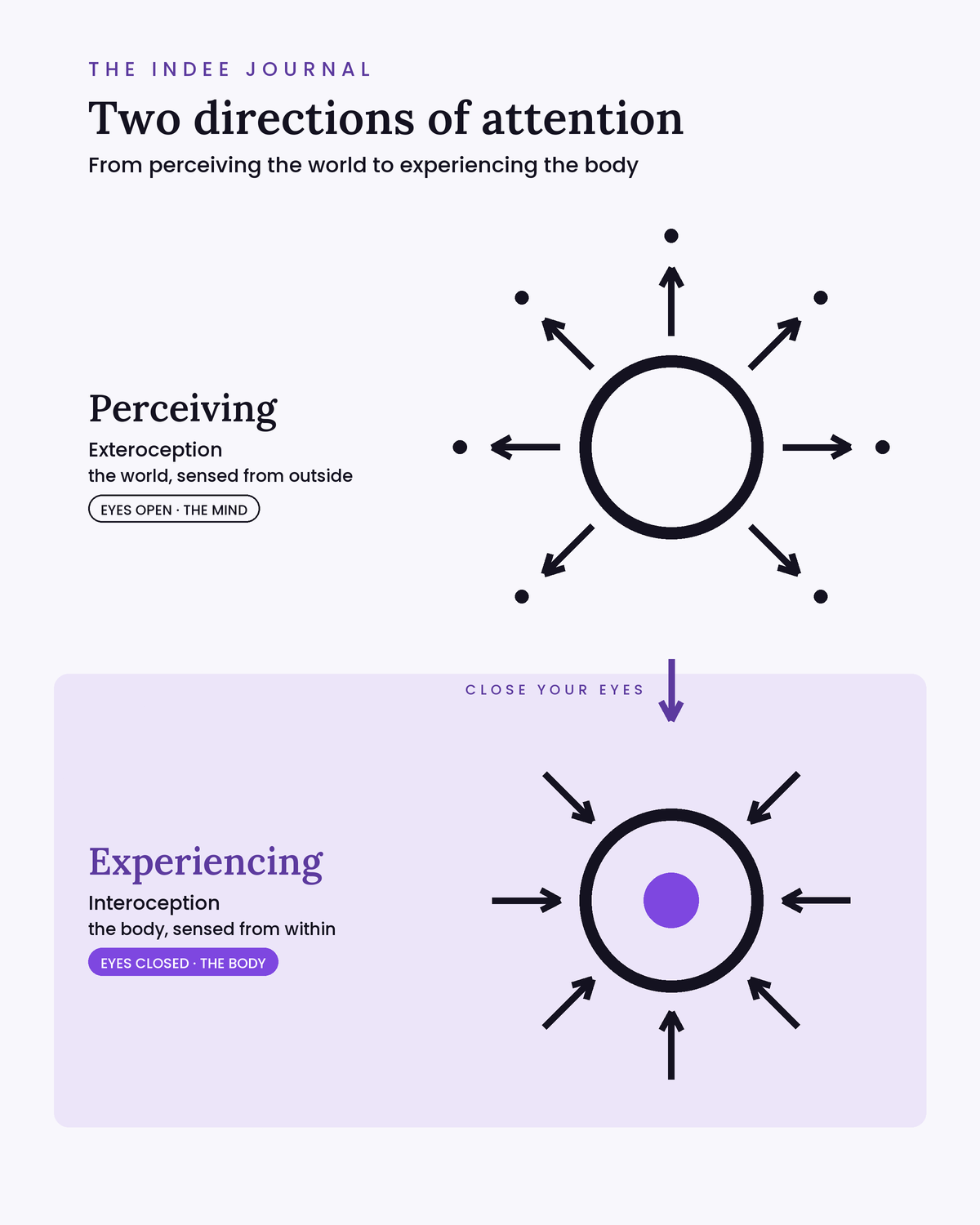
Research is catching up with a word for that turn: interoception, the sense of the body from within. Psychiatry now treats it as a field in its own right. In a randomised trial with 98 veterans, gains in interoception carried part of the benefit of mindfulness training for post-traumatic stress. Eyes open, the mind is perceiving. Eyes closed, the body is experiencing.
There is a warning inside that research as well. For someone carrying trauma or panic, attention turned inward without guidance can sharpen fear instead of settling it, and the clinical reviews of interoception training are candid about how mixed the results still are. Going inward is a skill. The traditions treated it that way: taught, guided, paced. A practised guide's job is to steady you past the mind's appetite for stimulation, at a pace the body can hold.
The evidence is narrower than this argument wants it to be. No EEG band separates healing states from ordinary ones: a meta-analysis of 54 studies found that only alpha tracks relaxation with any reliability, and even then unevenly. Mindfulness courses taught over video have proved about as effective as the same courses in a room. Filmed nature measurably lowers stress. Anyone claiming the science crowns eyes-closed work as the one door to healing is ahead of the data, and that includes us.
What the research does support is a smaller claim, and an older one: attention has a direction. Outward is where the modern world holds it by default, and outward is superb for learning and doing. Inward is where the body gets heard. Between the two sits a skill our culture has mostly stopped teaching, and it deserves its old name: the art of listening. More than ears. The nervous system listens all the time; the practice is choosing what to give it.
A teacher I trained with said it better than any study: anyone can ask people to close their eyes. The teaching is what you do with them once it's dark.
Indee is built on that old bet: sessions made for listening, with nothing on the screen that needs you once one begins. Close your eyes. Half a second later, the quiet has already begun.
Naveed Akram is the founder of Indee, quiet infrastructure for the intention economy.